
“Love is the ability and willingness to allow those that you care for to be what they choose for themselves without any insistence that they satisfy you.” – Dr. Wayne Dyer
When we talk about love and attachment, it’s easy to mix them up. In today’s world, the lines between these two concepts often blur. But what if we could understand the subtle but powerful difference between them? Let’s explore this through a simple yet profound story from a humble forest—a place where the truth about love and attachment quietly reveals itself.
The Banyan Tree and the Mango Tree
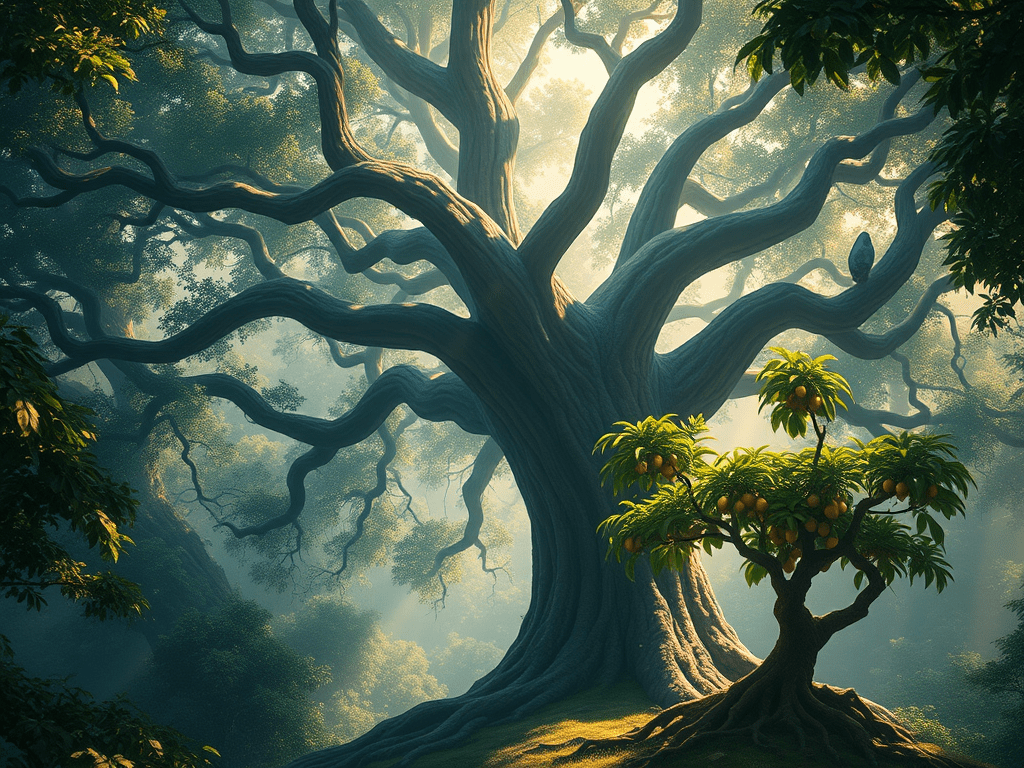
In a peaceful forest, there lived two beautiful trees. One was a grand Banyan Tree, with vast branches that stretched wide, offering shade to countless creatures. It stood tall, deeply rooted in the earth, feeling joy in simply being of service. Birds, animals, and travelers would often rest under its shelter. The Banyan tree didn’t ask for anything in return—it simply gave.
The other tree was a Mango Tree—small, but blessed with sweet, juicy fruits. People and animals came from far and wide to pluck the fruit from its branches. The Mango tree felt a sense of fulfillment in providing its bounty. Yet, there was something the Mango tree didn’t realize. It had grown attached to its fruit. It feared losing them, felt incomplete when the fruit was taken away. With each passing season, it clung harder to its fruits, and the joy it once felt was replaced by anxiety and insecurity.
One fateful day, a mighty wind swept through the forest. The Mango tree gripped its fruit tightly, afraid of losing it. But the wind was too strong, and many of its fruits were blown away. The tree, overwhelmed by fear and attachment, lost pieces of itself. Some branches even broke.
On the other hand, the Banyan Tree, unmoved by fear, stood strong. It had learned to let go freely, knowing that it didn’t need to cling to anything to remain whole. It had mastered the art of unconditional love—giving without the expectation of receiving. And so, it endured the storm while offering its shelter to those who sought refuge.
Love vs. Attachment: A Reflection on Freedom
In this simple story, the Banyan Tree stands for love—unconditional, free of attachment, and rooted in giving. It doesn’t need anything in return. Its essence is pure and unfettered. The Mango Tree, though, symbolizes attachment—it finds its happiness and sense of security in the fruit it bears, its value tied to external outcomes. When those fruits are lost, the Mango tree experiences emotional pain and sorrow.
This story mirrors the very essence of love in human relationships. How many times have we found ourselves in relationships or situations where we felt that our happiness depended on the other person? We loved them, yes—but we also needed something in return. Maybe it was validation, affection, or security. This is attachment. And, much like the Mango tree, attachment can cause pain when the outcome we desire is lost or doesn’t materialize.
But true love—like the Banyan Tree—is about freedom. It’s not about clinging to a person, an outcome, or a moment. Love is about acceptance and giving, not controlling or expecting. Love is about freedom—the freedom to let go, the freedom to be who we are, and the freedom to let others be who they are, without conditions.
Krishna’s Wisdom on Love and Attachment
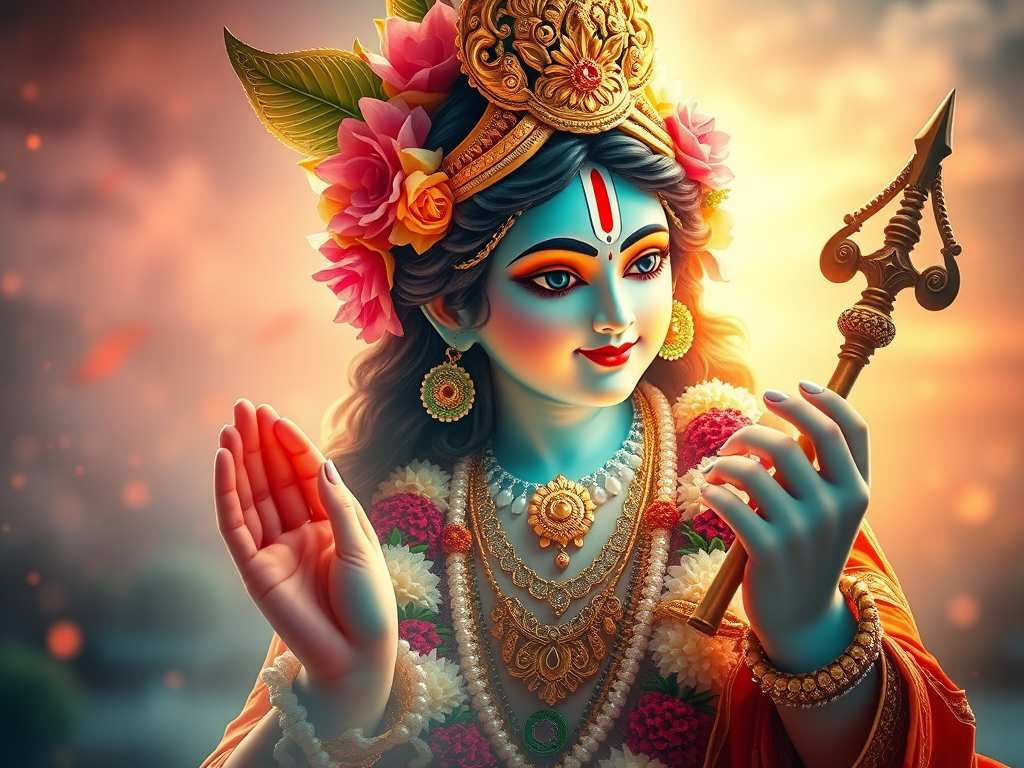
As we seek to understand the difference between love and attachment, we can turn to the words of Lord Krishna in the Bhagavad Gita. He beautifully expresses the essence of selfless love and non-attachment:
“The one who is not disturbed by the incessant flow of desires—who can withdraw his senses from the sense objects, as the tortoise draws its limbs within the shell—he is firmly established in wisdom.” — Bhagavad Gita (2.70)
Krishna teaches us that true love is not disturbed by external desires or attachments. It is grounded in wisdom, where we learn to withdraw from the need to control or possess. In love, we must recognize that we are not here to “own” anyone or anything. Instead, we are here to love freely, without fear or expectation.
A Lesson in Love
Think about the last time you truly loved someone—whether it was a friend, a family member, or even a pet. Was your love conditional? Did you need them to behave a certain way to make you feel secure? Or was your love freely given, with no strings attached?
True love is not bound by marriage, titles, or romantic attachments. It is a friendship that is built on selflessness and mutual respect. Think about how a mother carries her child for nine months in her womb, not because she wants something in return, but because her love is unconditional. Similarly, when we adopt a stray animal, we don’t do so out of attachment, but out of compassion and love. Love is an act of service, not an expectation.
And when we love without attachment, we experience a sense of freedom that is rare and beautiful. Love, when given freely, does not bind us—it liberates us. It creates space for growth, both for ourselves and for others.
The Power of Letting Go
So, the next time someone pours love into your life, ask yourself: Are they ready to let go? And if they answer, “Yes, if it makes you happy, I am ready,” don’t take it as a sign of weakness. It’s a sign of strength. True love allows for freedom, even when it means letting go.
Attachment, on the other hand, can leave us trapped in a cycle of wanting more, fearing loss, and experiencing pain when things don’t go as planned. Attachment is rooted in fear and desire—it seeks to control and possess. But love—true love—is the courage to release, to trust, and to live in the present moment.
As the great author Leo Tolstoy once said:
“The only thing we can’t give ourselves is love. The only way to get love is to give it away.”
Living the Moment
In the end, love and attachment are two paths we can choose. Love is liberating, grounding, and peaceful, while attachment can often lead to frustration and emotional turmoil. A relationship based on love, without attachment, is one where you don’t argue about staying or leaving. You simply live in the moment, enjoying the journey, respecting each other’s freedom, and embracing the present without looking back or worrying about the future.
This kind of love is spiritual—it transcends time, space, and expectations. It’s deep, soulful, and fulfilling, and it gives us the strength to grow together, even when we disagree. Life will bring misunderstandings, but it’s how we deal with them that matters.
So next time, ask yourself: Are you ready to love without attachment? True love is a bond that neither demands nor expects. It simply is. And in that space, we find the deepest fulfillment.
“The highest form of love is not the love that seeks to possess, but the love that lets go, that allows the other to be free.”
Live in love, without attachment. 🌿
 Untangled Mind